

4 min read
How modular systems enable machine manufacturers to offer seamless automation solutions
 Janik Ebner
:
Dec 3, 2025, 4:38:14 PM
Janik Ebner
:
Dec 3, 2025, 4:38:14 PM
Machine manufacturers face both pressure and opportunity when it comes to automation solutions. Beyond state-of-the-art machinery, many end customers expect complete, integrated systems that can deliver immediate productivity gains. Meeting this demand opens new revenue streams, but the challenge lies in how to provide these capabilities efficiently and profitably. Indeed, developing automation capabilities in-house demands resources, expertise and time that many machine manufacturers simply don't have.
The challenge is clear. How can machine manufacturers offer industrial automation solutions without derailing their core business or depending on third-party integrators who may complicate customer relationships?
The answer lies in a modular system approach that combines standardized components with flexible customization – delivered directly by a robot manufacturer rather than through the traditional integration channels.
The integration challenge for machine manufacturers
Traditionally, machine manufacturers faced an uncomfortable choice when customers requested automation capabilities.
Option 1: Develop in-house. This requires building an entire robotics division, hiring specialized talent, developing software platforms, and diverting engineering resources from core products. It can take years and cost a fortune.
Option 2: Partner with integrators. This introduces a third party into the customer relationship, creates dependencies, adds cost layers, and often results in inconsistent quality across installations.
Option 3: Refer customers elsewhere. This means losing potential revenue and allowing competitors to capture market share.
Now there is a viable alternative – working directly with a robot manufacturer which provides complete automation modules that machine manufacturers can easily integrate into their equipment.
What is a modular system for industrial automation?
A modular system for industrial automation and robotics consists of pre-engineered, standardized components that can be quickly configured for specific applications. Think of it as a comprehensive toolkit rather than custom-built solutions from scratch.
At the hardware level, this includes robot arms, grippers, safety enclosures and mounting systems designed to standard specifications. At the electronics level, it encompasses control systems, sensors and communication interfaces. And crucially, at the robotics software level, it provides a platform that ties everything together.
The key advantage is that these modules arrive battle-ready. They've been refined through hundreds of real-world installations, with common problems already solved and best practices already embedded.
Hardware, electronics, software: Integration at every level
True modularity extends across all three domains:
Hardware
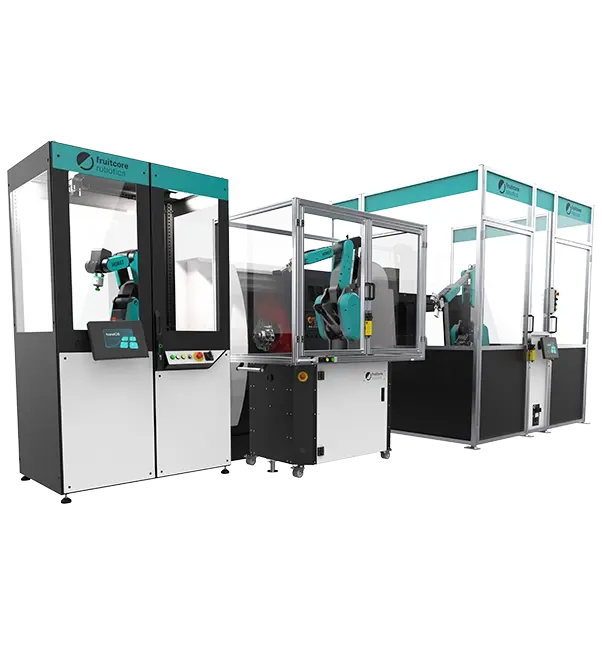
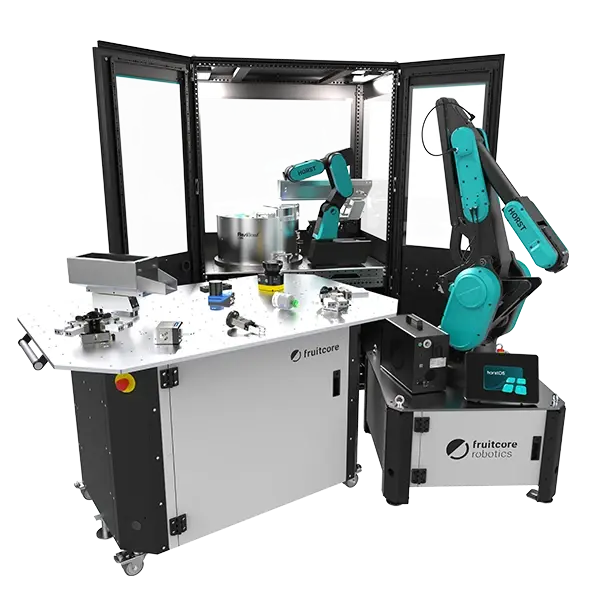
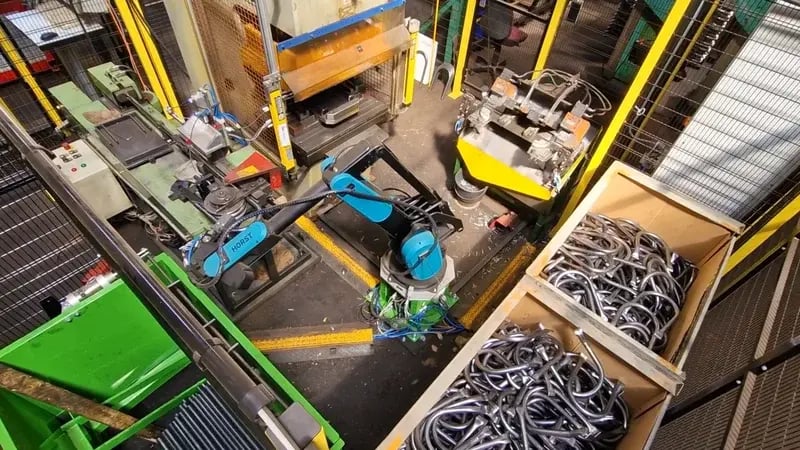
Physical components arrive as configurable kits. A machine tending application, for instance, includes robot mounting, parts presentation systems and safety guarding – all designed to standard dimensions that adapt to different machine configurations.
This standardization dramatically accelerates deployment while still allowing for customization where needed.
Electronics
The electronics architecture supports parallel processes and centralized control without requiring separate PLCs for simpler applications. This enables control of the entire automation system with all its components from a unified platform, while common industrial interfaces ensure high flexibility when integrating with existing equipment.
This reduces both complexity and cost, which is particularly valuable for machine manufacturers targeting small and medium-sized customers. When more sophisticated control is needed, the system scales up rather than requiring a complete redesign.
Software
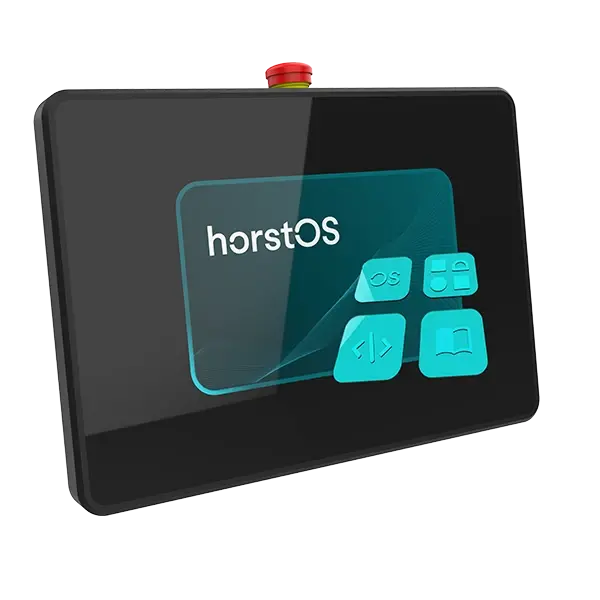
The horstOS operating system serves as the central control platform, managing not just the robot but all automation components. For machine manufacturers, this eliminates the need to develop proprietary control software or integrate disparate systems from multiple vendors.
The software's manufacturer-independent architecture means existing machine controls can communicate directly with the automation system. No complex middleware or translation layers are needed.
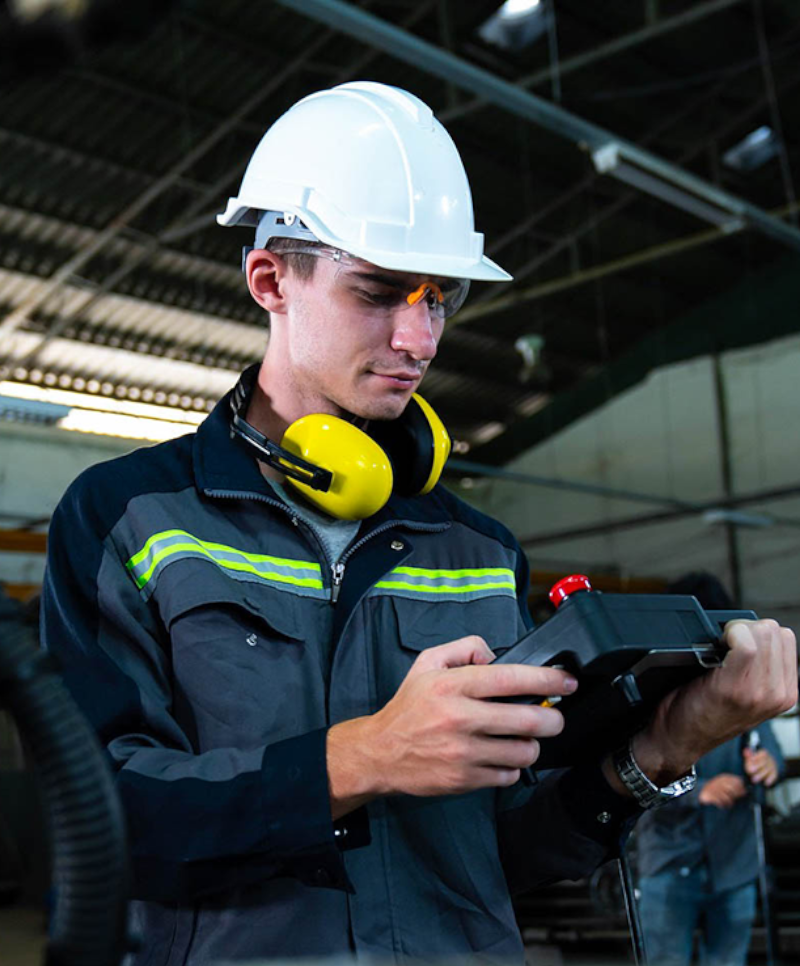
Crucially, both machine and automation can be operated from a single panel, simplifying operation for end users and reducing training requirements. This benefits both machine manufacturers during commissioning and end customers during daily operation.
From concept to production: Real-world timelines
Let’s look at a real-world example. A world-leading manufacturer of EDM (electrical discharge machining) equipment needed automation for loading and unloading their machines, with the goal of offering this as an optional module to customers. Using a modular system approach, the project progressed rapidly:
- September: Initial contact and requirements discussion
- November: Functional prototype demonstrated
- January: Series production begins
That's less than six months from concept to market-ready solution.
Compare this to traditional development timelines measured in years, or integration projects that stretch for months per installation. This modular system approach compresses what was once a multi-year initiative into a manageable project that doesn't disrupt ongoing operations.
Benefits for machine manufacturers
Partnering with a robot manufacturer for modular automation delivers several key advantages:
- Single point of contact: Rather than coordinating between machine engineers, robot suppliers, integrators and software developers, machine manufacturers work with one partner who manages the entire automation system.
- No integration dependencies: Everything comes from a single source. No waiting for integrators to become available. No coordination headaches between multiple vendors. The machine manufacturer maintains control of their customer relationships and project timelines.
- Rapid market entry: Standardized modules with proven performance characteristics mean new automation options can be brought to market in months, not years.
- Scalability: Start with one automation module for one machine model and expand to additional applications as demand grows.
Critically, all these benefits can be derived through a number of flexible partnership models tailored to each machine manufacturer's capabilities and strategic priorities.
Machine manufacturers with strong technical resources can design automation solutions themselves using the modular platform as their foundation, while those preferring to focus on core competencies can have the robot manufacturer handle the design and integration work.
The commercial arrangement is equally adaptable. Some machine manufacturers choose to sell the automation directly to end customers – potentially white-labeled under their own brand for consistent market positioning. Others prefer a co-branded partnership approach that leverages both companies' reputations. And some may choose to refer automation opportunities to the robot manufacturer while maintaining the primary customer relationship for their machinery.
This flexibility means machine manufacturers can enter the automation market at their own pace, according to their own business model, without being locked into a single collaboration structure.
Benefits for end users
End customers, i.e. the manufacturers buying the machines, also gain significant advantages. These include:
- Simplified procurement: Purchase the machine and automation as a package rather than coordinating separate acquisitions and installations.
- Easy retrofitting: Existing machines can be upgraded with automation modules quickly and cost-effectively. The modular design guarantees compatibility with the machine, which eliminates the uncertainty and expense of custom retrofit projects.
- Cost control: Easy automation at lower price points than custom integration projects. The standardization and volume production of modular components drives costs down while maintaining quality. At the same time, modern drive systems and energy-efficient designs reduce operational expenses. The AI-driven horstOS software minimizes the need for specialized programming expertise – this lowers labor costs for setup and modifications.
- Integrated support: End customers benefit from cohesive technical support rather than finger-pointing between multiple vendors when issues arise.
The future of machine manufacturer partnerships
Machine manufacturers who can offer seamless, cost-effective automation will capture market share from those who can't.
The modular system approach is a key enabler. It leverages proven automation components and robotics software, all while maintaining focus on core machine-building competencies.
For machine manufacturers ready to expand into automation without the overhead of building capabilities from scratch, modular partnerships with specialized robot manufacturers offer speed, flexibility and reduced risk.
Ready to explore modular automation?
Whether you're a machine manufacturer looking to add automation capabilities or an end user seeking integrated manufacturing solutions, fruitcore robotics's modular approach provides the foundation for rapid, cost-effective implementation.
Contact our team to discuss how modular automation systems can enhance your machine portfolio or production capabilities.