How to program industrial robots without coding experience
Introduction
For decades, industrial automation has been riddled with complexity. The promise of increased productivity and efficiency through robotic automation has always been clear, but the path to achieving it has been anything but straightforward.
If you've ever asked yourself ‘why are robots so expensive?’, or felt overwhelmed by the technical barriers to automation, you're not alone. Traditional robot programming has required specialized expertise, lengthy training periods and significant upfront investment – this has put automation out of reach for many small and medium-sized businesses.
But the landscape of industrial robotics is changing. Modern approaches to robotics and programming are breaking down these barriers and making automation accessible to companies of all sizes. Now, the question is no longer about whether automation is possible for your business, but how quickly you can implement it.
This guide explores the evolution of robot programming – from the complex, expert-dependent systems of the past to today's intuitive, AI-driven platforms that anyone can use. We'll show you how, with the right software and operating systems, you can transform automation from a specialized discipline into a user-friendly business tool.
How robot programming used to work
The era of expert-dependent automation
Traditional robot programming has been notoriously complex and required specialized knowledge that takes years to develop. Understanding seemingly simple questions like ‘how does a PLC work?’ (Programmable Logic Controller) was just the beginning. Mastering these systems demanded expertise in multiple programming languages, control theory and intricate system integration.
For most of the industrial robotics era, programming robots meant writing lengthy blocks of textual code. Engineers needed to specify every movement, coordinate and interaction with surgical precision. A single misplaced command could result in costly errors, damaged equipment and production delays.
The PLC problem: Complexity at every level
Classic PLC programming formed the backbone of industrial automation for decades. These control systems coordinated machines, sensors and robots across production lines, but at a significant cost in complexity and flexibility. Even minor adjustments to automated processes required calling in specialists.
How long does it take to learn PLC programming?
The answer typically ranges from several months to years, depending on the complexity of the systems involved. These timeframes have created significant bottlenecks – production changes that should take hours instead took days or weeks as companies waited for experts to intervene.
The skills gap was, and remains, substantial. Enterprises found themselves dependent on a shrinking pool of PLC experts who could command premium rates for their services. For many businesses, this dependency made automation economically unfeasible.
When robotics was only for the big players
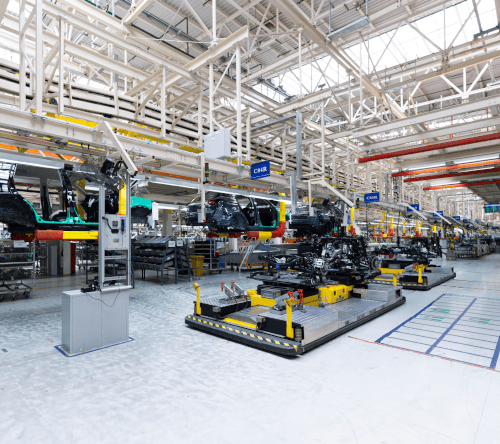
Throughout the late 20th and early 21st centuries, industrial robotics was effectively the exclusive domain of large-scale manufacturers, particularly in the automotive industry.
These companies had the resources to:
- Maintain dedicated teams of robot experts on staff
- Invest hundreds of thousands in sophisticated robotic systems
- Absorb lengthy implementation timelines spanning months or years
- Handle the ongoing costs of specialized maintenance and reprogramming
In addition, large-scale manufacturers also had the confidence and security of knowing a product would be produced and sold millions of times over. As a result, high upfront investment in automation and the necessary resources was easier to justify.
For smaller companies attempting to enter the automation space, the situation was more challenging. Without in-house robotics expertise, they had no choice but to work with system integrators – third-party specialists who designed, programmed and installed automated solutions.
While integrators filled a crucial gap, this model came with significant drawbacks:- High costs: Integration services added substantial expense to already-costly robotic systems.
- Lack of flexibility: Once a system was programmed and installed, making even minor changes often required calling the integrator back, adding to costs and delays.
- Knowledge lock-in: Companies remained dependent on their integrators for troubleshooting, updates and modifications.
- Limited scalability: Expanding automation to new processes meant starting the expensive, time-consuming integration process all over again.
This traditional model locked many small and medium-sized enterprises out of industrial automation, despite the clear productivity benefits robots could deliver.
As a result, less than one in five SMEs in the manufacturing industry used industrial robots as of 2021. The promise of automation remained unfulfilled for the majority of businesses who could benefit from it most.
How is robotic automation being carried out today?
The promise of easy automation
Walk through any tradeshow floor or scroll through automation vendor websites today, and you'll encounter one of these common slogans: ‘easy automation’, ‘simple robotics’, ‘plug-and-play solutions’.
The market has clearly recognized that complexity is the enemy, and many companies now promise to simplify robotic automation.
But there is a catch. Not all approaches to simplification are created equal.
What types of automation solutions are available?
There are many ways companies are offering supposedly easy/simple automation. Some vendors offer software-only solutions, while others bundle software with hardware. Some focus on specific robot types, while others attempt platform-agnostic approaches.
What really is robotic process automation by today’s standards?
Robot automation has evolved far beyond the robot itself. Now, it encompasses the entire ecosystem, which includes hardware, software, sensors, grippers, safety systems and control interfaces. However, many solutions that promise simplicity address only fragments of this ecosystem.
What are cobots and do they simplify automation?
Let’s consider collaborative robots, or cobots. These machines have gained popularity by promising a straightforward answer to industrial automation. One of their major selling points is hand-guiding – physically moving the robot arm to ‘teach’ it a path, with no programming required.
It sounds simple. And for certain applications, it works. But hand-guiding doesn't scale to complex processes. This leaves other challenges for manufacturers, including conditional logic and integration with vision systems or coordinate multiple devices. So, what appears simple for basic tasks quickly becomes inadequate when real production demands emerge.
Similarly, some vendors have bet vast sums on AI in robotics, particularly in vision and parts recognition. Advanced cameras and machine learning algorithms can now identify and locate objects with impressive accuracy. This solves a genuine problem, but it's only one piece of the puzzle.
Once the camera recognizes a part, that information still needs integrating into the broader process. The robot must know what to do with that data, how to coordinate with other equipment and how to handle exceptions. Without a comprehensive operating system tying everything together, you've simply traded one complexity for another.
Do you still need robot experts for modern automation systems?
Many modern solutions still depend on system integrators to bridge the gaps between components. You might have an easy-to-use robot, but connecting it to your CNC machine, configuring safety protocols and programming the workflow still requires outside expertise.
This fragmented approach means companies often find themselves in a familiar position: dependent on specialists, facing long implementation times and struggling with inflexibility once systems go live. The technology has advanced, but the fundamental barriers haven't disappeared—they've just shifted.

.
What makes industrial automation truly simple?
Genuine simplification in robotics and programming can only be achieved with a holistic approach. It's not enough to make one aspect easier while leaving others complex.
To adopt this holistic approach to robotic automation, operators need:
- Unified control of all process components from a single interface
- The ability to set up, program and modify systems without specialized training
- Transparency into what's happening at every step
- Flexibility to adapt as production needs change across different applications
- Support throughout the entire automation journey – from feasibility assessment through daily operation
Remember, most vendors will promise simplicity. The real question you should be asking is whether a vendor simplifies the entire automation process or just isolated pieces of it.
How fruitcore robotics simplifies the entire automation process
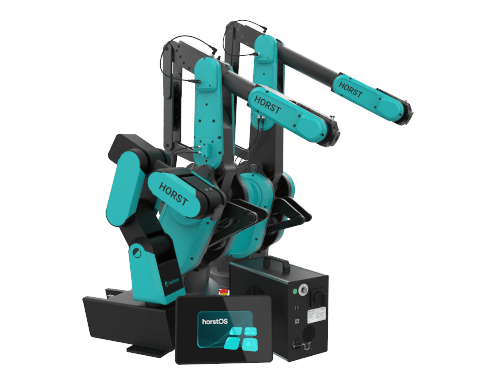
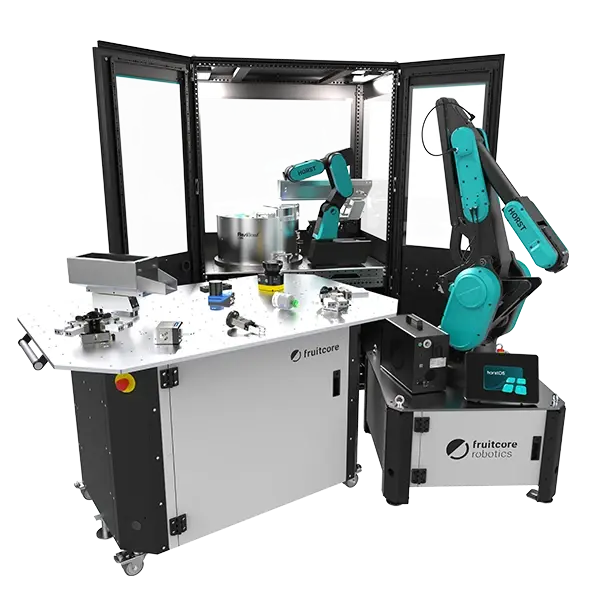
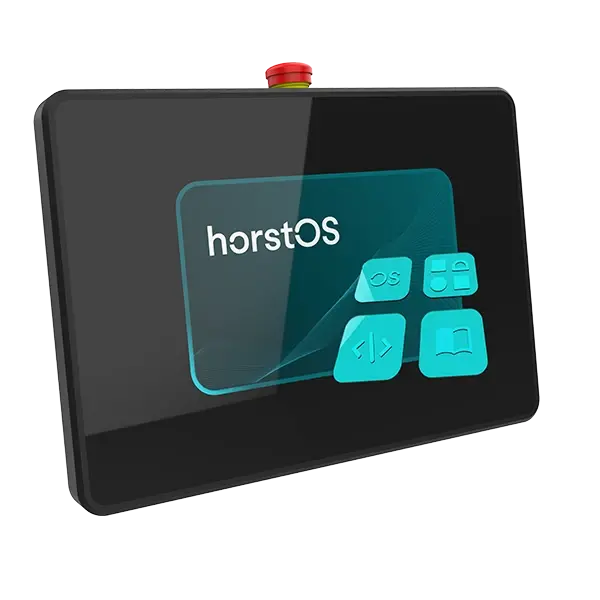
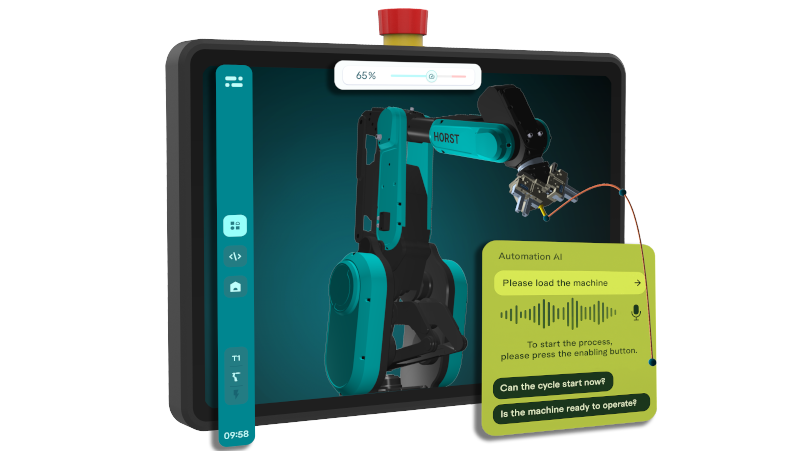
We recognized early that true automation simplicity requires more than addressing individual pain points. That's why we developed horstOS – an operating system designed to guide users through every phase of implementing and running automated applications.
Unlike fragmented solutions that excel at one task while leaving others complex, our robotics software provides a unified environment for the complete automation journey. From initial project setup through daily production control, operators work within a single, consistent interface.
The three-phases of simplified robotic automation
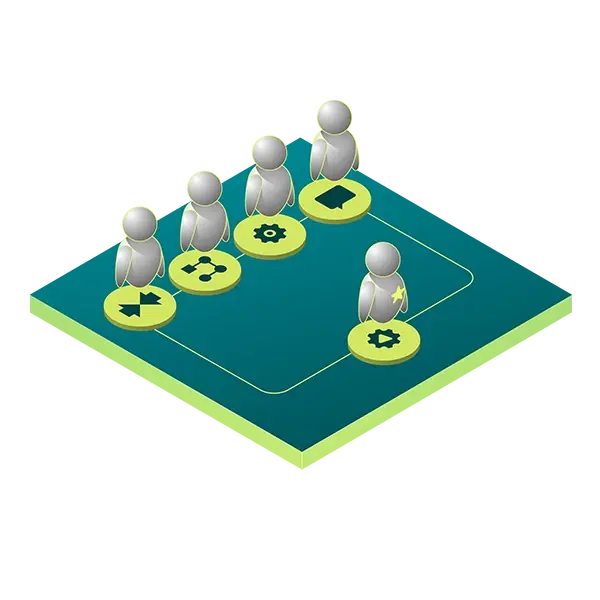
horstOS structures automation into three logical phases, each supported by specialized tools and interfaces:
Phase 1: Project setup
During setup, users configure all system components – robots, grippers, sensors, cameras and other peripherals – through a central management interface. The software features manufacturer-independent integration, meaning components from different vendors combine seamlessly. An auto-complete function and predefined standards accelerate configuration, which removes integration headaches that plague traditional systems.
Phase 2: Program generation
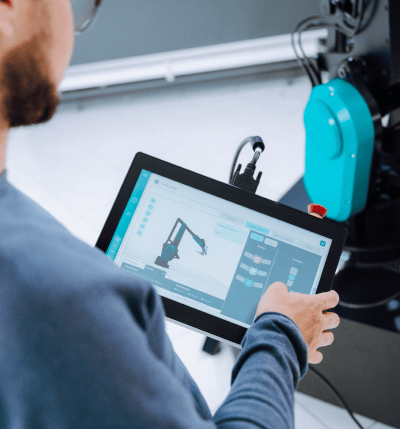
The programming phase leverages horstOS's graphical interface and realistic 3D world simulation. Users can create complete robot programs in as little as 15 minutes for straightforward applications. The 3D environment displays a digital twin of the production setup, which allows operators to identify potential collisions and optimize paths before running physical hardware. Programs transfer effortlessly between desktop PC and robot, meaning feasibility studies can be conducted early in project planning.
Phase 3: Process Control
Once programs are running, the Process Control view can be customized to show only the functions relevant to specific operators and processes. This simplifies operation by hiding unnecessary complexity and helps prevent operator errors by restricting access to critical system parameters.
What is graphical programming and how does it eliminate coding?
Traditional robot programming demanded fluency in specialized languages and syntax. horstOS changes this entirely through its graphical user interface operating system.
With no code programming, operators build robot programs by selecting actions from intuitive visual menus rather than writing lines of code. Each program module is added via step-by-step wizards that guide users through configuration options. There's no need to memorize commands, understand programming languages or debug syntax errors.
This graphical programming environment includes purpose-built blocks for common industrial applications – palletizing, pick-and-place operations, machine tending and more. These blocks dramatically reduce programming time while minimizing the potential for errors.
For users who need more advanced capabilities, horstOS also supports textual programming. But even here, many commands can be added through guided wizards rather than manual coding.

.
What is an AI copilot and how does it support automation?
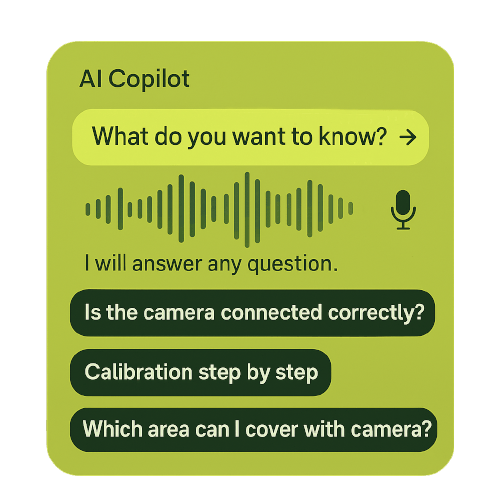
Modern AI programming capabilities are integrated throughout horstOS via the AI Copilot feature.
Rather than replacing human operators, the AI Copilot acts as a real-time assistant and is available at every phase of the automation process. It can:
- Answer questions about system capabilities and programming options
- Generate program modules and functions based on natural language descriptions
- Optimize existing programs for efficiency and safety
- Provide context-sensitive help without interrupting workflow
- Detect potential errors early and suggest corrections
This represents ai driven automation in its most practical form – artificial intelligence augmenting human capability rather than obscuring it behind a black box. The PLC copilot ai functionality is particularly valuable, as it can help users configure process logic without needing deep expertise in traditional PLC programming.
guided wizards rather than manual coding.
Eliminating the need for separate PLCs
One of horstOS's most significant innovations is its ability to control entire applications without requiring separate programmable logic controllers. All process participants (robots, conveyors, sensors, actuators) can be controlled centrally through the robot's operating system.
For workstations and standalone processes, this eliminates both the complexity and cost of traditional PLC systems. It also removes the need for specialized PLC programming expertise, as everything operates through the same intuitive interface.
When processes do require parallel operations – such as querying a camera for the next part position while the robot is still moving – horstOS handles this through its parallel processes feature. Multiple operations can execute simultaneously, which helps to reduce cycle times without introducing the complexity of traditional PLC coordination.
Eliminating the need for separate PLCs (H3)
One of horstOS's most significant innovations is its ability to control entire applications without requiring separate programmable logic controllers. All process participants (robots, conveyors, sensors, actuators) can be controlled centrally through the robot's operating system.
For workstations and standalone processes, this eliminates both the complexity and cost of traditional PLC systems. It also removes the need for specialized PLC programming expertise, as everything operates through the same intuitive interface.
When processes do require parallel operations – such as querying a camera for the next part position while the robot is still moving – horstOS handles this through its parallel processes feature. Multiple operations can execute simultaneously, which helps to reduce cycle times without introducing the complexity of traditional PLC coordination.
How does simulation software reduce automation risk?
The simulation environment in horstOS is another key feature. Unlike competitors who use different software for simulation versus production, fruitcore robotics maintains identical functionality in both environments.
This browser-based robotic software simulation allows companies to:
- Conduct thorough feasibility studies before committing to hardware purchases
- Pre-commission applications entirely offline, minimizing production downtime during installation
- Optimize and modify programs while production systems continue running
- Share projects instantly with fruitcore robotics experts for troubleshooting and advice
The simulation includes a comprehensive component library with around 200 pre-configured items, each with 3D models, documentation and, where applicable, predefined functions and interface specifications. This allows custom setups to be created and tested quickly.
Do you need coding skills for robot programming?
The short answer is no. horstOS's graphical programming handles most applications without any need for coding. However, the system also recognizes that some situations demand the precision and flexibility of textual code – both approaches work seamlessly within the same environment.
Textual functions can be created and embedded into graphical programs. Entirely textual programs can be developed for scenarios requiring complex conditional logic or computational operations. And throughout, the step-by-step wizards remain available to assist with command insertion even in text mode.
This hybrid approach means users never hit capability ceilings. Simple applications stay simple, while complex requirements remain achievable without switching to entirely different programming environments.
How do we keep our robotic automation systems up to speed?
Robotic process automation software will quickly lose its value if it stagnates after purchase. Crucially, horstOS benefits from continuous over-the-air updates as part of fruitcore robotics' service package.
New features, performance improvements and bug fixes arrive automatically. The AI Copilot gains from ongoing enhancements to its underlying models. Security patches deploy without requiring manual intervention.
This servitized approach ensures that automation systems improve over time rather than becoming obsolete. It also means that fruitcore robotics can maintain ongoing relationships with customers – we provide support and training from initial scoping through years of production operation.
Why transparency matters in AI-driven automation
A user-friendly interface combined with seamless connectivity and unified access to all process components forms the foundation for truly AI-driven operations. horstOS demonstrates this principle by making every system element visible and controllable through intuitive screens.
But what really separates effective AI integration from problematic implementations is transparency.
AI integration in industrial settings should empower operators, not mystify them. When AI makes decisions or takes actions, operators must be able to see and understand what's happening – why the system chose a particular path, how it's reacting to sensor inputs, and what logic drove its decisions.
Without this transparency, automation becomes binary. It either works or it doesn't, leaving operators powerless to identify issues or make improvements. True AI integration means providing people with insight, not replacing their understanding.
horstOS achieves this through clear visualization of data flows, explainable decision-making processes, and the ability to step through AI-assisted program logic just as easily as manually created sequences.
This, we believe, is how to integrate AI into software. Operators remain in control and are supported by AI rather than supplanted by it. And as AI capabilities expand, they enhance operator expertise rather than replace it. As a result, systems are both more powerful and more trustworthy.
Transform your production with intelligent automation
The evolution from complex, expert-dependent systems to intuitive, AI-supported platforms is greatly expanding the pool of people and businesses who can benefit from industrial automation and robotics.
SMEs no longer need to choose between automation's benefits and their budget constraints. With platforms such as horstOS, the barriers that once made automated industrial robotics the exclusive domain of large manufacturers have fallen away.

Start a conversation
Whether you're taking your first steps toward automation or looking to modernize existing systems, measurable results are no longer over the horizon.
Are you ready to explore what modern automation can do for your business? Contact our team to discuss your specific requirements and discover how fruitcore robotics can help you achieve your production goals.
fruitcore robotics GmbH
Macairestraße 3
78467 Konstanz
+49 (0) 7531 976 240
info@fruitcore.de